Dog Care
Dec 12, 2025
How to Prepare Your Pet for In-Home Care
Practical steps to prepare your dog and home for in‑home grooming in Melbourne — setup, coat prep, calming methods, what to expect and aftercare.
In-home dog grooming is a practical way to keep your pet comfortable, especially in Melbourne, where climate and urban factors can affect your dog's coat and skin. Here's what you need to know:
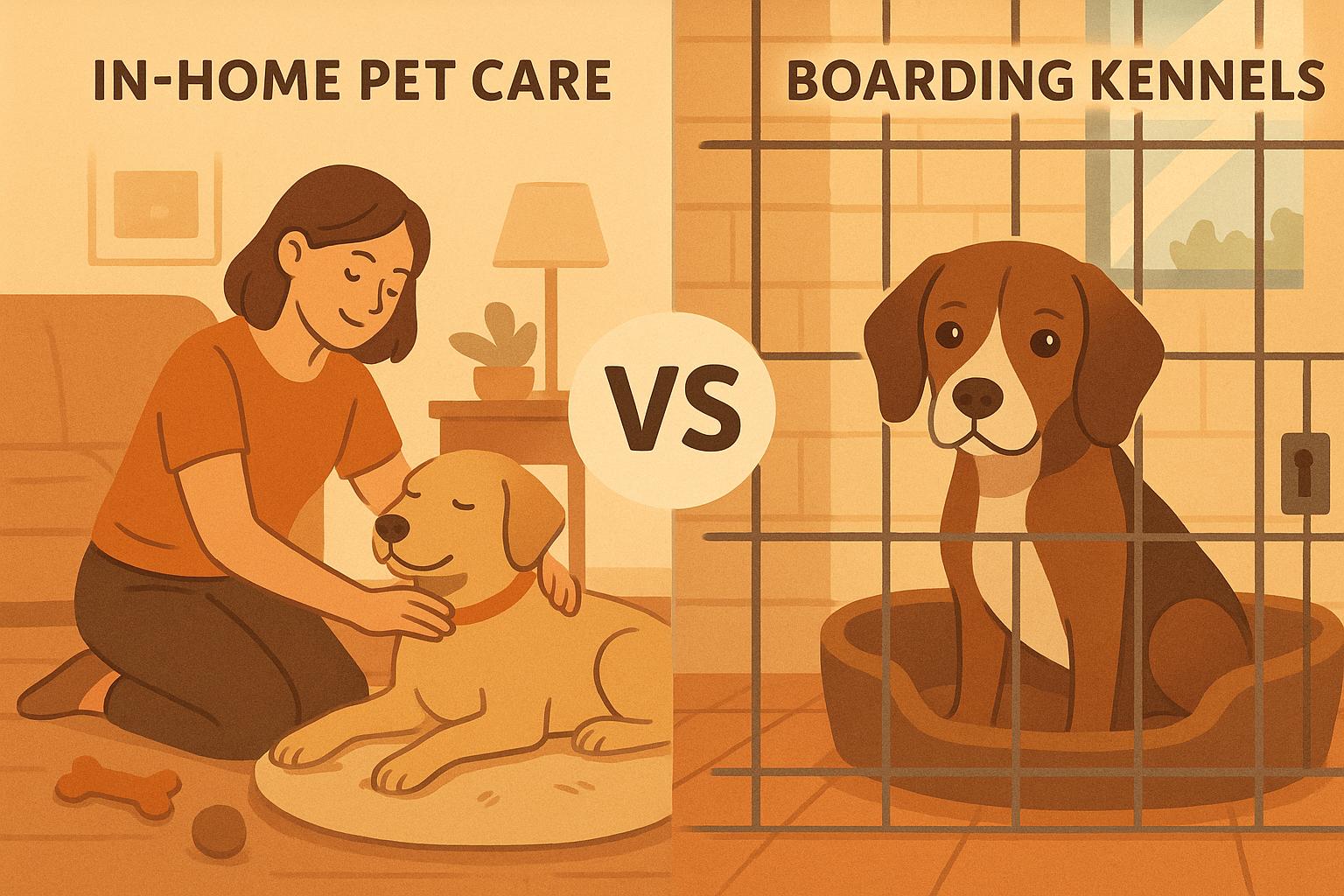
Why In-Home Grooming? It reduces stress for anxious, older, or large dogs by offering one-on-one care in familiar surroundings. Mobile groomers bring everything they need to your doorstep.
Preparation Steps: Set up a quiet, well-lit space with non-slip mats and access to water. Regular brushing before the appointment helps prevent matting and makes the session smoother.
What to Expect: Professional groomers handle bathing, brushing, nail trimming, and breed-specific cuts. They also check for skin issues or parasites, ensuring your pet's health.
Ongoing Care: Regular at-home brushing and professional grooming every 4–8 weeks keep your dog’s coat healthy and prevent matting.
In-Home Dog Grooming Services in Melbourne
Standard Services and Health Checks
In Melbourne, professional in-home dog groomers bring a fully equipped mobile van right to your doorstep, offering more than just a simple bath. A typical grooming session includes pre-brushing to remove loose fur, followed by a bath using shampoos tailored to your dog's needs. Options range from Herbal Deluxe for overall coat care to Whitening shampoos for light-coloured breeds, Medicated shampoos for specific skin concerns, and Flea and Tick treatments as needed. After the bath, services like nail trimming, towel and blow-drying, and a spritz of dog-friendly cologne complete the package.
For dogs needing more specialised care, groomers such as Blue Wheelers Expert Groomers and WagTime – Melbourne Dog Grooming & Care offer breed-specific cuts. These include precise styling for Poodles or practical summer trims for Golden Retrievers. Other options include detangling for long-haired dogs, hygiene clips around sensitive areas, and seasonal adjustments - such as shorter summer cuts to keep dogs cool or winter trims that balance warmth with coat maintenance. Melbourne groomers cater to all breeds and sizes, ensuring personalised care for every dog, whether they’re "big and fluffy" or "short and squishy." Tailored quotes ensure grooming services meet the unique needs of every pet.
Understanding when in-home grooming is ideal can further enhance the experience for both you and your dog.
When to Choose In-Home Grooming
In-home grooming is especially beneficial for dogs who are anxious, older, or larger breeds that may struggle with travel or feel overwhelmed in busy salons. As GroomerLink Guides notes:
For some dogs, a big grooming salon with other dogs and dryers blasting can be overwhelming. An alternative in many areas is mobile groomers – they come to you with a grooming van, and it's just your dog being handled one-on-one in a familiar environment. Many anxious dogs do better with mobile grooming or an in-home grooming service, since it eliminates other dogs and strange surroundings. It can be a bit pricier, but often well worth it if it spares your dog the extra stress.
This one-on-one approach in a quiet, familiar setting removes the stress of travel, loud noises, and unfamiliar environments. Mobile groomers travel to suburbs across Melbourne, from Ringwood North to Port Melbourne, offering both convenience and reduced anxiety for pets.
For dog owners who value both their pet's comfort and the health of their coat and skin, in-home grooming is becoming a popular choice. It’s a practical solution that prioritises your dog’s wellbeing while saving you time and effort.
Preparing your pet and home ahead of the appointment ensures an even smoother grooming experience.
What is House Call Dog Grooming? // what you need to know // my equipment & process
Preparing Your Dog and Home for the Groomer
How to Prepare Your Dog for In-Home Grooming: Step-by-Step Guide
Setting Up the Grooming Area
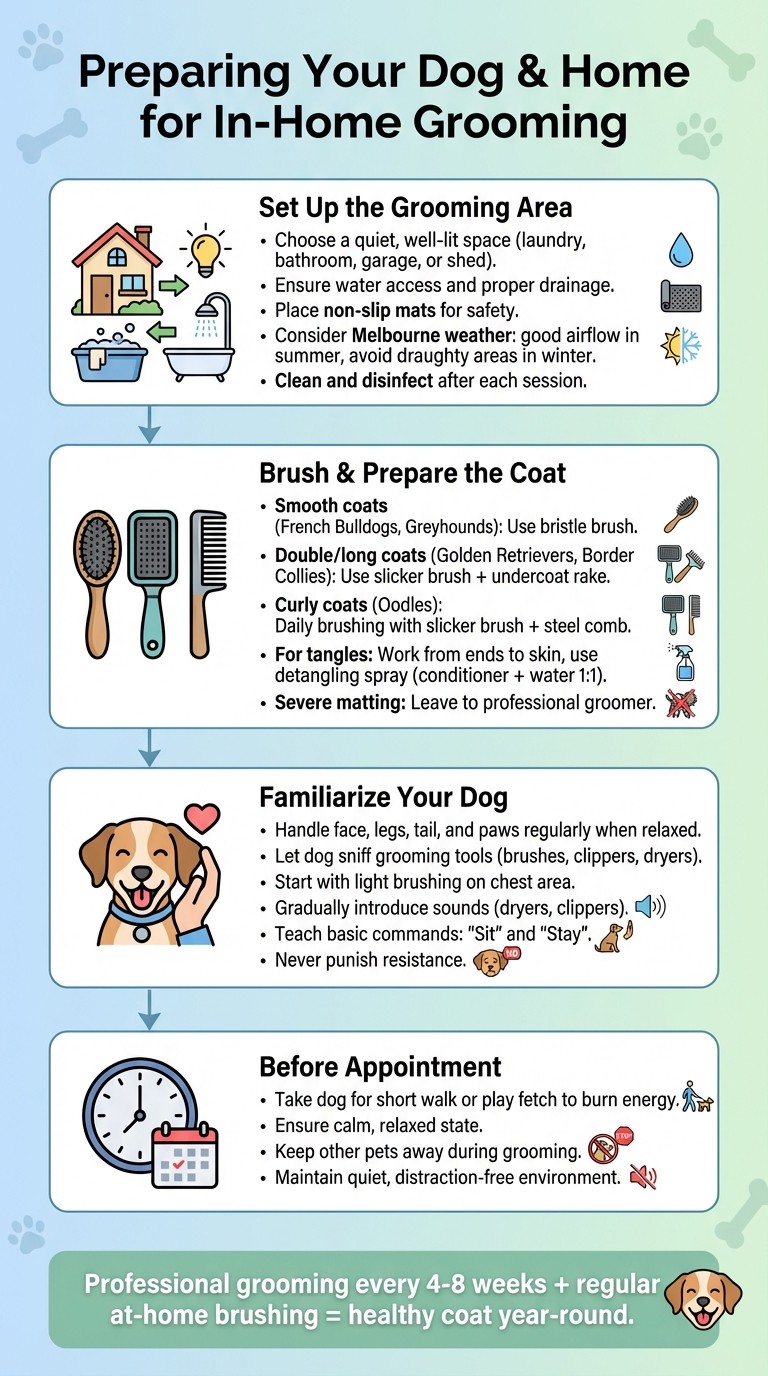
Pick a quiet, well-lit spot with enough space for your dog and the groomer to move comfortably. Ideal locations might be a laundry room, bathroom, spare room, garage, or shed - especially if there's access to water and proper drainage. In Melbourne, keep the weather in mind: ensure good airflow or use a fan during the summer, and avoid cold, draughty areas in winter to keep your dog comfortable. Place non-slip mats under your dog to prevent accidents. After each grooming session, make sure to clean and disinfect the area and tools thoroughly. Once the space is ready, move on to preparing your dog’s coat to make the groomer’s job easier.
Brushing and Coat Preparation
With the grooming area set, turn your attention to your dog’s coat. Regular brushing before the groomer arrives can make a big difference. For smooth-coated breeds like French Bulldogs or Greyhounds, a bristle brush works well to remove loose hair and stimulate the skin. Dogs with double or long coats, such as Golden Retrievers or Border Collies, benefit from a slicker brush used in sections, paired with an undercoat rake to reach deeper layers. For curly-coated breeds like Oodles, daily brushing is often necessary - start with a slicker brush, then follow up with a stainless steel comb.
If you encounter minor tangles, gently work through them starting from the ends and moving toward the skin. A detangling spray (a simple mix of conditioner and water in equal parts) can help, but don’t soak the area as it can tighten the mat. If you find that a comb won’t glide through the coat, it may indicate severe matting that requires professional attention. In such cases, a full clip-down might be the best option to avoid causing your dog unnecessary discomfort .
Getting Your Dog Used to Grooming
To ensure a smooth grooming session, it’s important to familiarise your dog with grooming routines. Regularly handle their face, legs, tail, and paws when they’re relaxed to build comfort with being touched. Start introducing nail clipping by simply touching and examining their paws and nails, rewarding calm behaviour. Let your dog explore grooming tools - like brushes, clippers, and hair dryers - by sniffing them, and reward them for staying calm. Begin with light brushing on an easy area, like the chest, and gradually increase the time and range of areas brushed. Slowly introduce the sounds of devices like hair dryers or vacuum cleaners to help reduce anxiety when they’re in use.
Before the groomer arrives, consider taking your dog for a short walk or playing a game of fetch to burn off some energy, leaving them more relaxed. Teaching basic commands like “Sit” and “Stay” can also help the groomer position your dog during the session. Most importantly, avoid punishing your dog if they resist grooming, as this can create more stress and make future sessions harder. These steps will help ensure a calm and efficient grooming experience for both you and your dog in Melbourne .
During the Grooming Appointment
What Professional Groomers Do
In Melbourne, professional dog groomers follow specific methods to ensure your dog's coat and skin are cared for during the session. They begin by brushing the coat thoroughly before bathing. This step helps remove loose hair, knots, and dead skin, which is crucial for keeping the coat healthy. During the bath, warm water is used alongside rubber mats for stability and spray hoses for effective rinsing, ensuring your pet's comfort. Groomers often de-shed while the coat is wet, using specialised shampoos designed for undercoat care. These shampoos clean deeply and release dead hair without harming the healthy coat.
Groomers rely on dog-specific products and use force dryers after the bath to remove excess moisture efficiently. For certain breeds, they may use handstripping - a technique that removes dead topcoat hair without cutting, promoting healthier coat growth. Each dog's needs and personality are carefully considered, with groomers tailoring their approach to ensure comfort and wellbeing. Puppies and nervous dogs are handled with extra care, using a gentle, step-by-step process to create a positive grooming experience. These professional practices are designed to complement your involvement, ensuring a successful grooming session.
How Owners Can Help
Your role during grooming largely depends on your dog's temperament. For first-time or anxious dogs, staying nearby can provide reassurance. However, if your presence seems to increase their agitation, it's better to step away. Grooming can be stressful for some dogs - more than 40% experience anxiety during the process. It's essential to pay attention to signs like panting, shaking, whining, or attempts to escape.
If your dog appears stressed, stay calm, as your behaviour can influence theirs. Groomers may take breaks, use positive reinforcement, or adjust their approach to suit your dog's needs. Your primary responsibility is to help maintain a quiet, distraction-free environment by keeping other pets and loud noises away. These steps can help ensure a smoother experience for both your dog and the groomer.
Protecting Your Dog's Coat and Skin
Choose a shampoo that matches your dog's coat and skin type, and discuss the appropriate clip length with the groomer. This is especially important for double-coated breeds, as cutting the coat too short can interfere with their natural insulation. If your dog has matted fur, the groomer will adjust the cut to minimise discomfort.
After trimming nails, groomers often apply soothing balms to the paw pads and use vet-approved ear cleaners. They ensure the ears are thoroughly dried to prevent infections. If your dog shows any signs of skin irritation or discomfort during or after the session, notify the groomer immediately. This allows them to adjust their techniques or products to better suit your dog's needs.
Aftercare and Ongoing Grooming Maintenance
Post-Groom Care and Monitoring
Once your dog has been groomed, it's important to keep an eye on them for the next 48 hours. Watch for signs like redness, irritation, or excessive scratching, as these could indicate a reaction. If you notice anything unusual, contact your groomer straight away. For dogs with a shorter coat, consider dressing them in a light coat during Melbourne's cooler evenings to keep them comfortable.
Setting Up a Grooming Schedule
Your dog's grooming needs depend heavily on their coat type. For breeds with long or double coats, like Border Collies, aim for weekly brushing. Short-dense coated breeds, such as Huskies, typically need brushing weekly or fortnightly. Meanwhile, short-coated dogs, like Kelpies, can go a few weeks between brushes. Always brush your dog before a bath - start with a slicker brush to remove loose fur and follow up with a comb to tackle hidden knots.
Bathing should generally be limited to once a month unless your dog gets particularly dirty. Use a mild, dog-friendly shampoo to help protect their natural oils. Given Melbourne's climate, most dogs benefit from professional grooming every 4–8 weeks to keep their coat and skin in top condition. Sticking to a regular grooming routine not only supports your dog's health but also helps them feel more at ease during grooming sessions.
Working with the Same Groomer
For dog owners in Melbourne, building a relationship with the same groomer can make a big difference. A regular groomer gets to know your dog's usual condition and can spot subtle changes, like lumps, irritations, or signs of parasites, allowing for early intervention. These regular visits also ensure your dog's coat is styled to breed standards and help reduce grooming-related anxiety over time.
As Carolina Beach Animal Hospital explains:
"An expert pet groomer will look for lumps, lesions, rashes, inflammation, and any other issues. Early detection will often lead to a more manageable, shorter, and more effective treatment process." – Carolina Beach Animal Hospital
Conclusion
Achieving success with in-home dog grooming in Melbourne comes down to preparation, expertise, and a steady routine. By setting up a comfortable grooming area, brushing your dog's coat beforehand, and slowly introducing grooming tools, you can create a calm and stress-free experience - especially important for dogs who are new to professional grooming.
Building a strong relationship with your groomer is just as important. A trusted groomer gets to know your dog's specific needs, making each session smoother and more effective. Plus, their familiarity with your dog allows them to notice early warning signs like skin issues, lumps, or parasites, helping to address potential problems before they escalate.
Regular grooming is key to keeping your dog’s coat and skin healthy. Scheduling professional sessions every 4–8 weeks, paired with consistent at-home brushing, prevents matting and keeps their coat in top condition. In Melbourne, this routine ensures your dog stays comfortable and happy all year round.
FAQs
How can I help my dog feel calm during in-home grooming sessions?
To keep your dog relaxed during grooming at home, start by slowly getting them familiar with the tools and routines in a way that feels positive. Handle them gently, and when they stay calm, reward them with treats and plenty of praise. Before you begin, it’s helpful to take your dog for a long walk or have a play session to burn off extra energy.
Setting up a calming atmosphere can work wonders too. Try playing soft music, using pheromone diffusers, and staying calm yourself - dogs are incredibly in tune with their owner's emotions. Keep the grooming sessions short and focused, particularly if your dog is still getting used to the process. Always finish with something positive, like a treat or cuddle, to build their confidence and trust.
What should I do if my dog shows signs of discomfort or irritation after grooming?
If your dog seems irritated or uncomfortable after grooming, take a moment to carefully check the affected area. Look for signs like redness, swelling, or any other irritation. To help soothe your dog's skin, you can use a pet-safe hydrocortisone cream. Follow the instructions on the product and apply it twice a day for up to five days.
Keep a close eye on your dog during this period. If you notice the irritation getting worse, any bleeding, or if your dog seems unusually distressed, reach out to your local veterinarian in Melbourne right away. When it comes to your pet's health, it's always better to get professional advice if you're unsure.
How often should I book professional grooming for my dog in Melbourne?
The best grooming routine for your dog in Melbourne largely depends on their breed and coat type. On average, most dogs do well with professional grooming every 4 to 6 weeks. For dogs with longer coats, like Golden Retrievers or Cavoodles, more frequent grooming is often necessary to avoid matting and to keep their skin in good condition. On the other hand, short-haired breeds, such as Staffies, may not need as many grooming sessions, though regular baths and nail trims are still important.
Keeping up with grooming isn’t just about appearances - it plays a key role in maintaining your dog’s coat health and hygiene, especially considering Melbourne’s unpredictable weather. A professional groomer can help you create a grooming schedule tailored to your dog’s unique requirements.
Related Blog Posts
Clean, Calm & Professional Grooming.
Whether they need a full style cut or just a tidy-up, our Melbourne team provides a low-stress grooming experience that leaves your pet looking (and feeling) their best.