Dog Care
Dec 9, 2025
10 Signs Your Dog Needs More Exercise Daily
Ten signs your dog needs more daily exercise — restlessness, weight gain, chewing, lead‑pulling — plus practical, Melbourne‑friendly tips.
When your dog isn’t getting enough exercise, it can lead to physical and behavioural issues. From weight gain to destructive habits, these signs are your dog’s way of telling you they need more activity. Regular exercise improves their physical health, mental stimulation, and overall happiness.
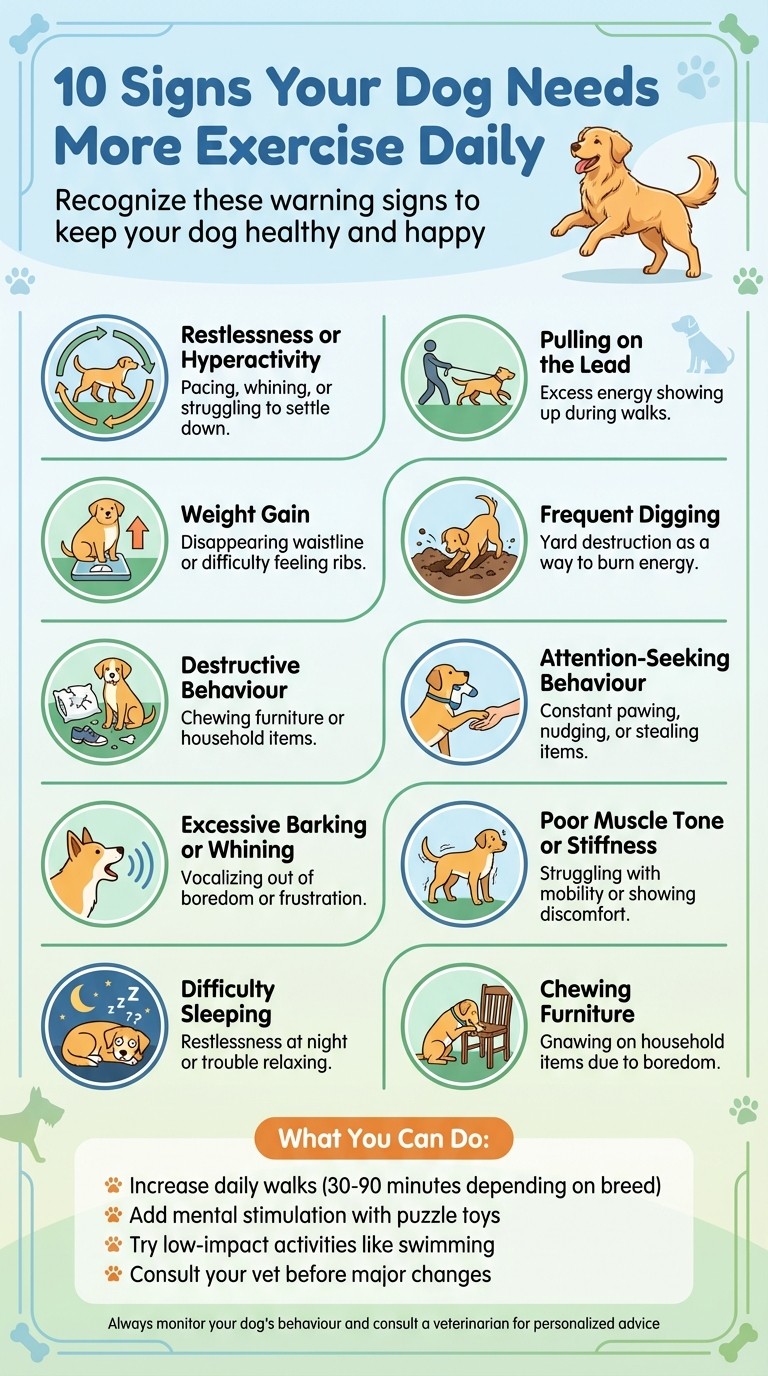
Here are 10 key signs your dog needs more exercise:
Restlessness or hyperactivity: Pacing, whining, or struggling to settle down.
Weight gain: A disappearing waistline or difficulty feeling ribs.
Destructive behaviour: Chewing furniture or household items.
Excessive barking or whining: Vocalising out of boredom or frustration.
Difficulty sleeping: Restlessness at night or trouble relaxing.
Pulling on the lead: Excess energy showing up during walks.
Frequent digging: Yard destruction as a way to burn energy.
Attention-seeking behaviour: Constant pawing, nudging, or stealing items.
Poor muscle tone or stiffness: Struggling with mobility or showing signs of discomfort.
What you can do: Increase daily walks, incorporate mental stimulation like puzzle toys, and consider low-impact activities like swimming. Monitor your dog’s behaviour and consult a vet before making major changes, especially for older or overweight dogs. Regular grooming also supports their health and comfort, making exercise more enjoyable.
If you’re in Melbourne, take advantage of off-leash parks, cooler morning or evening walks, and professional dog walking services to keep your dog active and healthy.
10 Signs Your Dog Needs More Exercise - Visual Guide
1. Restlessness and Hyperactivity
Behavioural Changes Indicating Boredom or Stress
Does your dog pace around the house, circle endlessly, or seem unable to sit still? These behaviours often point to a lack of proper exercise. When dogs don’t get the physical and mental stimulation they need, their energy has nowhere to go, leading to frustration and restlessness - especially noticeable at night. Maven Pet explains it well:
A dog with pent-up energy from a day of inactivity is more likely to be a dog pacing at night. If they haven't had enough physical exercise or mental stimulation, they may struggle to settle down when it's time to sleep.
Other signs to watch for include excessive panting (even when it’s not hot), frequent whining, or unusual vocalisation. You might also notice your dog being hyper-alert, constantly scanning its surroundings. These behaviours suggest your pet is struggling to relax, and without enough activity, this cycle of restlessness can intensify.
Energy Levels and Ability to Settle or Relax
A lack of exercise doesn’t just make your dog restless - it also affects their ability to wind down. Even if they’re physically tired, a mentally restless dog will struggle to relax, making training harder and creating stress for both you and your furry friend.
Melbourne’s unpredictable weather can make these issues more noticeable, especially when outdoor activities are limited. High-energy breeds and working dogs are particularly vulnerable to these challenges, as their exercise needs are often greater. To help your dog find balance, consider adding more physical and mental stimulation to their daily routine. Activities like interactive games, puzzle toys, or longer walks can work wonders in helping your dog reach a calm and content state.
Let’s explore how other behaviours might reveal your dog’s need for more exercise.
2. Weight Gain or Obesity
Physical Health Indicators: Weight and Muscle Tone
If your dog no longer has a defined waistline, it’s a clear sign they might not be getting enough exercise. Ideally, a healthy dog should have a visible waist between their ribs and hips. If this definition has disappeared and your dog looks rounder, it’s time to take another look at their activity levels.
Here’s a quick check: gently press along your dog’s ribs. If you can’t feel them without applying significant pressure, it means they’ve likely put on extra weight [30, 31]. This added weight can strain their joints, increase health risks, and reduce their overall quality of life. These physical changes are a strong indicator that your dog needs more daily activity.
Energy Levels and the Ability to Settle
Weight gain isn’t just about appearance - it’s also reflected in your dog’s behaviour. If their diet hasn’t changed but they’re still gaining weight, it’s likely due to insufficient exercise. Combined with visible weight gain, this highlights the need for a more active routine [27, 3, 28].
Before jumping into a new exercise plan, it’s essential to consult your veterinarian. Dr Robin Downing from The Downing Center for Animal Pain Management cautions:
One misconception I sometimes encounter is that if a dog is overweight or obese, then the pet parent must suddenly erupt into a rigorous exercise plan for the dog.
Instead, weight loss should be approached with a combination of gradual dietary adjustments and slowly increasing physical activity [3, 5].
For tailored advice, Melbourne-based services like The House Call Vet can help create a plan suited to your dog’s needs. Begin with short, manageable walks and gradually increase the time and intensity. Swimming is another excellent option for overweight dogs, as it provides great cardiovascular benefits without putting stress on their joints [3, 4, 10]. Beyond weight loss, regular exercise improves coat health, which pairs well with routine grooming in Melbourne. During warmer months, aim for walks during cooler parts of the day - early mornings or late evenings - and avoid exercise when the temperature exceeds 27°C [3, 11].
How Much Exercise Your Dog Really Needs | PetSmart Veterinary Services

3. Destructive Behaviour at Home
Just like restlessness or sudden weight gain, destructive behaviour can also hint at a lack of exercise.
Destructive Behaviours as Signs of an Exercise Deficit
If your dog has taken to shredding your shoes, chewing furniture, or tearing apart cushions, they might not just be acting out - they could be trying to tell you they need more physical activity. These behaviours often stem from boredom and unspent energy rather than simply being "naughty". Dr Sandra C. Mitchell from PetMD highlights this connection:
"If your dog is starting to chew things around the house, scratch or dig at doors, or raid the kitchen or trash can, the problem might be not enough exercise!"
Dogs have natural instincts to herd, hunt, and explore, and if these needs aren’t met through exercise, they may find destructive ways to release their energy. Chewing on inappropriate items isn’t just frustrating - it can lead to serious health risks like gastrointestinal blockages or poisoning if they swallow harmful objects, not to mention costly vet visits and home repairs.
Energy Levels and the Ability to Relax
Adding variety and consistency to your dog's daily exercise routine can work wonders in reducing these behaviours. For dog owners in Melbourne, this might mean combining weekday doggy daycare with long, leisurely weekend walks in your neighbourhood. To keep your dog mentally stimulated between exercise sessions, try using puzzle toys or rotating their chew toys regularly. These activities not only engage their mind but also help channel their energy constructively.
And don’t forget, regular grooming appointments are more than just about keeping their coat shiny - they’re an opportunity to monitor your dog’s overall health, which can be helpful when managing their exercise and activity needs.
Next, we’ll explore how excessive barking can also signal a lack of exercise.
4. Excessive Barking or Whining
If your dog won’t stop barking or whining, it could be their way of asking for more physical activity.
Behavioural Changes That Point to Boredom or Stress
Dogs often use vocalisation to show frustration or restlessness. As Rover.com explains:
Whining and barking are common ways dogs communicate that they're frustrated, restless, or want something
. If your dog’s basic needs - like food, water, and comfort - are already taken care of, but they’re still vocalising excessively, boredom from a lack of exercise might be the issue. Dogs that don’t get enough activity can also become more anxious and stressed, which might make them overreact to everyday situations, like seeing a pedestrian or hearing the doorbell. This constant barking or whining is often a clear signal that their energy isn’t being used up, which can lead to other problems linked to insufficient exercise.
Energy Levels and Relaxation
Dr Marc Smith, a veterinarian and owner of Natchez Trace Veterinary Services, explains:
Exercise can actually reduce the cortisol levels in your dog... Lowering the cortisol levels can help your pet release endorphins, leading to a happier and less anxious dog
. Outdoor activities help burn off excess energy and can significantly cut down on barking.
For dog owners in Melbourne, pairing regular grooming with increased daily exercise can make a big difference. A well-groomed coat is much easier to handle after outdoor adventures, and professional groomers can also spot any skin issues or stress-related concerns that might be adding to your dog’s anxiety. Next, we’ll explore another important sign: trouble settling down or sleeping.
5. Difficulty Settling or Sleeping
If your dog is pacing instead of curling up at bedtime, it might be a sign they’re not getting enough exercise during the day.
Energy Levels and Relaxation
Excess energy can make it tough for dogs to relax at night. Being constantly on edge leaves them restless, preventing them from winding down when they should be sleeping.
To address this, it’s important to plan the right activities at the right times. According to Melbourne Dog Trainers, adult dogs should get at least 30 to 60 minutes of mental and physical stimulation before a long rest period. For dogs needing more downtime, aim for 60 to 90 minutes of outdoor exercise in both the morning and evening. To help them settle, allow 1–2 hours between exercise and bedtime so they have time to calm down. Striking this balance between activity and rest is essential to ease anxiety-related behaviours.
Signs of Boredom or Stress
Not enough exercise can lead to anxiety, which may show up as trembling, excessive licking, or increased barking - behaviours that can disrupt sleep. After outdoor activities, you can help your dog learn to self-soothe by trying calming exercises like scattering treats in the grass for sniffing or following relaxation protocols. Establishing a consistent, quiet bedtime routine also reinforces settling behaviours.
For dog owners in Melbourne, improving your dog’s exercise routine also means paying attention to grooming. Regular grooming prevents matting and skin irritation, which can cause discomfort and disturb sleep. Professional groomers in areas like Fitzroy or St Kilda can help keep your dog’s coat healthy and spot any skin issues or hot spots contributing to restlessness. By maintaining their coat, you not only keep your dog comfortable but also stay alert to any physical signs of stress linked to insufficient exercise.
6. Pulling on the Lead During Walks
If your dog is constantly lunging and dragging during walks, it’s a clear sign they might need more exercise in their daily routine.
Energy Levels and the Ability to Relax
Pulling on the lead often stems from built-up energy that hasn’t been properly released. Activities like calm, scent-focused walks or structured training sessions can help channel that energy in a positive way. As Hannah Fitchett from the KONG Company points out:
If there's nowhere for your dog's excess energy to go, it will often be released as leash pulling
While it might seem tempting to engage your pup in high-adrenaline games, these can actually make the problem worse by overstimulating them. Instead, stick to low-key, calming activities. Additionally, regular grooming can play a surprising role in managing this behaviour by ensuring your dog feels comfortable and free of irritations.
Signs of Boredom or Stress
Lead pulling can also be a sign that your dog is bored or stressed. Without enough mental stimulation, even a walk can feel unfulfilling. Dr Susan Hazel, Associate Professor at the University of Adelaide's School of Animal and Veterinary Sciences, highlights the importance of enriching your dog’s time outdoors:
Don't drag them along. For dogs, letting them go really slowly and sniffing everything is great enrichment.
In cities like Melbourne, addressing lead pulling isn’t just about taking longer walks. Regular grooming is equally important. Suburbs like Carlton and Richmond show how keeping your dog’s coat tangle-free and their nails trimmed can reduce discomfort that might contribute to pulling. Irritations like matted fur, overgrown nails, or skin conditions can make walks unpleasant for your dog, leading to restless behaviour. Groomers can also spot issues like skin irritations or hot spots, helping you tackle the root causes of their discomfort. Combining regular exercise with proper grooming creates a well-rounded care plan for dogs in Melbourne and beyond.
7. Chewing Furniture or Household Items
When your dog starts gnawing on chair legs or cushions, it’s often a sign they’re not getting enough physical or mental stimulation. Chewing is their way of releasing pent-up energy. Without enough exercise, their stress levels can rise, leading to behaviours like destructive chewing. This habit often goes hand-in-hand with other signs of boredom or restlessness, highlighting the need for a more tailored approach to their exercise and grooming routines.
Health Risks and Damage at Home
Chewing isn’t just a nuisance; it can harm your dog’s health. Damaged teeth or intestinal blockages from swallowing pieces of furniture are real risks. For Melbourne dog owners, upping your dog’s exercise routine is key. Take advantage of local parks like Fitzroy Gardens or St Kilda Beach to burn off that extra energy. Pair this with regular grooming appointments to keep their coat in good condition. Overgrown nails or matted fur can cause discomfort, which might make destructive behaviours worse.
Keeping Your Dog Engaged and Relaxed
To tackle chewing caused by stress, mental stimulation is just as crucial as physical activity. Jade Currie, Animal Program Manager at The Lost Dogs’ Home, explains:
Mental stimulation is just as important as physical exercise.
Engage your dog with puzzle toys, treat-dispensing KONGs, or scent games to keep their mind active. Regular grooming sessions in Melbourne not only help maintain their coat but also provide an opportunity to spot stress-related behaviours early. Groomers can detect issues like skin conditions or discomfort that might be fuelling your dog’s chewing habits, allowing you to address the root cause effectively.
8. Frequent Digging in the Yard
Signs of Boredom or Stress
If your backyard looks like a construction site thanks to your dog’s digging, it might be more than just a quirky habit. Digging can be a way for dogs to burn off pent-up energy, especially when they aren’t getting enough physical activity or mental stimulation.
Breed-Specific Tendencies and Destructive Behaviour
Certain breeds are naturally inclined to dig. Take terriers, for instance - they were originally bred to hunt vermin, which makes digging almost second nature. But when they don’t get enough exercise or mental challenges, that instinct can turn into destructive behaviour. According to Dogs Australia:
Terriers benefit from being given a job as they like mental and physical challenges like tug toys, snuffle mats and retrieving balls. They can become bored and exercise themselves by barking and digging.
For terrier owners in Melbourne, an hour of daily exercise that combines physical activity and mental engagement often does the trick. On the other hand, breeds like gundogs, hounds, and working dogs might need up to two hours of activity each day to keep them from becoming restless or destructive.
This highlights how important it is to tailor exercise routines to your dog’s breed and energy levels, ensuring they have a productive outlet for their natural behaviours.
Boosting Relaxation Through Activity
To help your dog settle more easily, consider increasing the number of structured walks. Melbourne’s scenic spots, like Royal Park or Albert Park Lake, are perfect for this. You can also keep things interesting by rotating toys to keep their minds engaged.
9. Attention-Seeking Behaviour
Behavioural Changes Indicating Boredom or Stress
If your dog is constantly pawing, nudging, or following you around, they might be trying to tell you something: they're bored or stressed due to a lack of physical or mental activity. Dogs are quick learners and often figure out that behaviours like pawing or even stealing objects get your attention. If your furry friend is swiping items like shoes, cushions, or even the TV remote, it's their way of saying, "Pay attention to me!" These actions are more than just mischief - they're signs that your dog could benefit from more engagement and exercise.
Energy Levels and Ability to Settle or Relax
Take the example shared on The Labrador Site about a 15-month-old chocolate Labrador. Despite being taken for two daily walks, this energetic pup still wandered around constantly. This highlights how insufficient exercise can show up in a dog's restless behaviour. For most adult dogs, two daily walks lasting one to two hours are recommended, and working breeds may need even more.
Dr. Sagi Denenberg, a Veterinary Behaviourist at North Toronto Veterinary Behaviour Specialty Clinic, suggests that meeting your dog's physical and mental needs is crucial to curbing attention-seeking behaviour. For dog owners in Melbourne, this might involve visiting off-leash parks like Fawkner Park or Princes Park. These spaces allow your dog to burn off energy through play and socialising with other dogs. After a good session of exercise and stimulation, your dog should be able to relax and settle down without constantly vying for your attention. Plus, reducing stress not only improves behaviour but also promotes a healthier coat - something to keep in mind for professional grooming in Melbourne.
10. Poor Muscle Tone or Stiffness
Physical Health Indicators
If your dog struggles to get up or moves with noticeable effort, poor muscle tone might be the issue. Muscle atrophy - essentially the loss of muscle mass - can weaken your dog's mobility and overall strength. This condition often develops gradually, especially in ageing dogs or those with reduced activity levels. Spotting the signs early is key to managing the issue and slowing its progression.
Without regular exercise, muscles tend to weaken, and joints can become stiffer - this is particularly common in older dogs. The result? Discomfort that discourages movement, potentially creating a cycle where inactivity worsens the problem. You might notice your dog hesitating before climbing into the car, taking longer to rise after lying down, or moving more carefully around the house. For pet owners in Melbourne, these behaviours are a clear call to action. Adjusting your dog's routine with activities like swimming at dog-friendly beaches can help break this cycle.
Energy Levels and Ability to Settle
Exercise plays a critical role in maintaining muscle strength, improving flexibility, and supporting joint health by boosting circulation and mobility. For dogs with poor muscle tone, low-impact activities are a great starting point. Swimming is particularly beneficial, especially for dogs dealing with joint or hip issues or those undergoing physical therapy. Luckily, Melbourne offers plenty of dog-friendly beaches and pools where your pup can exercise without putting too much strain on their joints.
Incorporating regular low-impact activities can also help ease stiffness. Gentle walks, scenic hikes, or a controlled game of fetch (if suitable for your dog's condition) are all excellent options. However, when introducing more exercise, take it slow. Keep your dog's age, fitness level, and the weather in mind, and always ensure they have access to fresh water.
Better muscle tone doesn't just improve mobility - it can also lead to a shinier, healthier coat. This is something you might notice during your dog's regular grooming sessions at your local Melbourne groomer.
Exercise Solutions for Melbourne Dog Owners
If your dog is showing any signs of needing a change in their routine, consider these exercise tips tailored for Melbourne's environment.
Melbourne's parks and walking trails are fantastic for keeping your dog active, but it’s important to plan carefully - especially during the warmer months.
Work around the heat. During summer, aim to walk your dog in the early morning or late evening when temperatures are cooler. This is particularly important for breeds like Pugs, Bulldogs, or Boxers, which can struggle in the heat due to their shorter snouts. If you notice any signs of breathing trouble, stop the activity immediately.
Take advantage of off-leash areas. Melbourne is home to plenty of dog-friendly spaces, from inner-city parks to scenic bushland trails and coastal paths. Many of these spots have designated off-leash zones, although some come with time restrictions during summer. Check with your local council to stay updated on the rules. Suburbs like Brighton, Richmond, and Fitzroy are known for their excellent options, offering a mix of open spaces for exercise and socialisation. These outings also tie in well with your dog’s grooming routine, encouraging natural movement and interaction with other dogs.
Opt for low-impact activities. If traditional walks aren’t ideal - whether due to the heat or your dog’s physical needs - try alternatives like swimming. Swimming is particularly beneficial for dogs with joint issues or those working on building strength and endurance. It’s also a great way to keep them active on hot days when walking might not be practical.
For those with busy schedules, Melbourne-based dog walking services can help ensure your pup gets regular exercise without missing a beat.
Consistent physical activity not only improves your dog’s overall health but also contributes to a healthier coat - an important factor in maintaining professional grooming standards in Melbourne.
When to See a Vet or Dog Trainer
While a lack of exercise can explain many dog-related issues, some signs point to underlying health problems that need professional care. If you've already increased your dog's activity but persistent symptoms remain, it might be time to call in the experts.
Watch for warning signs like excessive drooling, heavy panting, loss of appetite, increased thirst, stiffness, or sudden aggression. If you notice any of these, schedule a vet visit before ramping up their exercise routine. Dr Marc Smith, Veterinarian and Owner of Natchez Trace Veterinary Services, highlights the risks:
Dogs are like humans in that they can injure themselves after not exercising for a while. Just like us, dogs can tear muscles, overheat, have joint issues, or even stress out their heart.
For overweight or older dogs, a vet check-up is especially important to ensure they're ready for increased activity. If health issues aren't the root cause and behaviour problems persist, professional training might be the next step.
Unresolved behavioural issues - like uncontrollable leash pulling, aggression, or constant barking - can benefit from the expertise of a Melbourne-based dog trainer. Trainers are also skilled at addressing complex fear behaviours, such as freezing or exaggerated appeasement, using techniques like systematic desensitisation. On top of behaviour concerns, physical changes like sudden weight gain should never be ignored.
Unexpected weight gain may signal serious conditions such as diabetes, heart disease, or joint problems. Speak with your vet immediately if you notice rapid changes, and consult them before beginning any weight loss plan.
Melbourne dog owners can turn to trusted local services, such as WagTime, to help balance regular exercise with professional health and behavioural support.
Conclusion
Being aware of these warning signs can make a big difference in your dog's health and happiness. Signs like restlessness, destructive chewing, weight gain, and poor muscle tone shouldn’t be overlooked - they’re often your dog's way of signalling that something needs to change. By noticing these behaviours, you can take steps to adjust your dog's routine and improve their well-being.
Taking action early is key. Regular physical activity and mental stimulation help maintain strong muscles, healthy joints, and an overall balanced lifestyle. In places like Melbourne, it’s smart to plan walks during cooler parts of the day to protect your dog’s coat and skin. Early mornings or evenings are ideal, and don’t forget to provide plenty of shade and water during outdoor activities .
FAQs
How can I tell if my dog's weight gain is due to not getting enough exercise?
If your dog is putting on weight without any changes to their diet, it could be due to not getting enough exercise. Keep an eye out for other clues like restlessness, boredom, or even destructive behaviour - these are often signs that your furry friend needs more activity in their routine.
Weight gain from inactivity is especially common in high-energy breeds. To help, you can try adding more walks to their day, scheduling regular play sessions, or visiting some of Melbourne’s fantastic dog-friendly spots like Albert Park or Yarra Bend Park. Staying active not only helps control their weight but also boosts their overall wellbeing and mood.
If you’ve upped their exercise and the weight gain continues, it’s a good idea to check in with your local Melbourne vet. They can help rule out any potential health concerns that might be contributing to the issue.
How can I keep my dog mentally stimulated in Melbourne?
To keep your dog’s mind active and engaged in Melbourne, try mixing up their routine with scent games, puzzle feeders, or even a classic game of hide-and-seek. Changing up your walking routes is another great option - Melbourne offers plenty of parks and dog-friendly trails that can add some variety and excitement to their day.
When the weather isn’t cooperating, or if your dog needs to take it easy due to crate rest, there are still plenty of ways to keep them entertained. Rotate their toys to keep things fresh, offer frozen treats, or scatter their food around for them to sniff out and find. You can also focus on obedience training or teaching them new tricks - both are excellent ways to challenge their brain. Just be sure to tailor these activities to suit your dog’s breed and energy level, so they stay happy and engaged.
What’s the best way to safely increase exercise for an older or overweight dog?
Start with gentle, low-impact activities like leisurely walks on soft ground or swimming - both are kind to your dog’s joints. Over time, you can gradually extend the duration and intensity of these exercises, but always keep an eye on your dog's comfort and energy.
Look out for signs of tiredness, such as heavy panting, limping, or hesitation to continue. If you notice these, it’s time to scale back. Before making any major changes to your dog’s routine, it’s a good idea to check in with your vet. They can help ensure the plan suits your dog’s age, weight, and overall health.
For those in Melbourne, there are some fantastic dog-friendly spots to explore. Places like Edinburgh Gardens in Fitzroy or Albert Park Lake provide plenty of space for relaxed, enjoyable exercise.
Related Blog Posts
Clean, Calm & Professional Grooming.
Whether they need a full style cut or just a tidy-up, our Melbourne team provides a low-stress grooming experience that leaves your pet looking (and feeling) their best.