Dog Care
Dec 13, 2025
What to Ask Before Hiring a Pet Sitter
Key questions to ask Melbourne pet sitters about breed-specific grooming, daily coat care, safety, training, insurance and emergency plans.
Finding the right pet sitter involves more than ensuring your dog is fed and walked. Grooming plays a big role in your dog's health and comfort, especially for breeds like Cavoodles, Poodles, and Border Collies, which are popular in Melbourne. Without proper grooming, your pet's coat can mat, leading to discomfort and potential health issues. Here’s what you need to know:
Breed-Specific Grooming: Ask if the sitter has experience with your dog's breed and understands their coat care needs. For example, Poodles need regular ear cleaning, while double-coated breeds like Huskies require careful brushing.
Daily Grooming Tasks: Confirm how often they will brush your dog, check for mats, and clean debris after outdoor activities.
Bathing Practices: Ensure they use gentle, dog-safe products and know how to avoid over-bathing, which can dry out your dog's skin.
Training and Safety: Look for sitters with qualifications like a Certificate III in Animal Care Services and ask about their hygiene practices and handling of grooming tools.
Melbourne-Specific Care: Discuss how they manage grooming in Melbourne's unpredictable weather, including hot summers and rainy winters.
Essential Questions to Ask Before Hiring a Pet Sitter in Melbourne
Questions About Grooming Skills and Experience
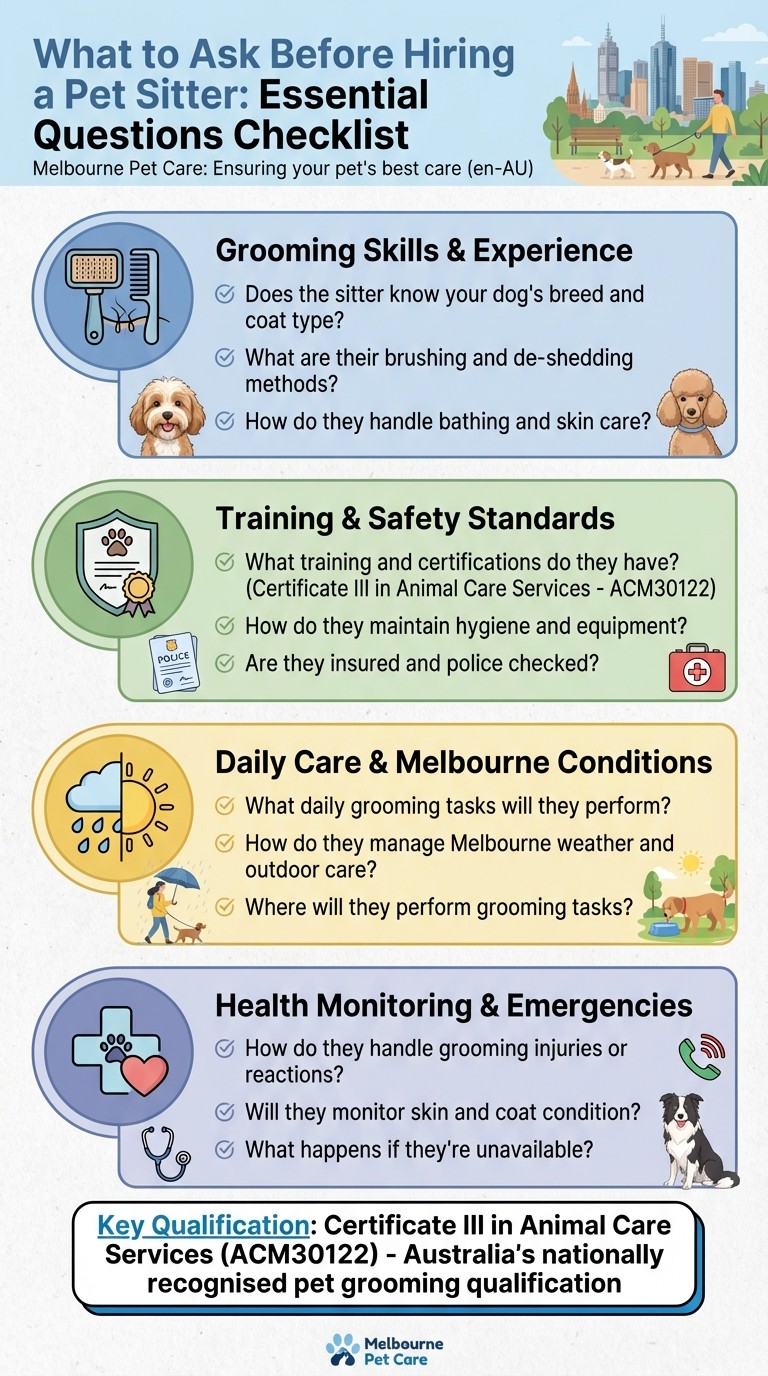
When hiring a pet sitter in Melbourne, their grooming expertise is just as important as their general pet care skills. Asking the right questions can help you determine if they understand the specific grooming needs of your dog's breed and coat type. This is essential for keeping your dog's skin and coat in top condition while ensuring the sitter aligns with Melbourne's professional grooming standards.
Does the Sitter Know Your Dog's Breed and Coat Type?
Begin by asking: "What experience do you have grooming dogs of my breed, and are you familiar with their coat care requirements?" This question is key because different breeds have unique grooming needs based on their coat type, temperament, and health considerations. For instance, Poodles have continuously growing hair that can easily mat if not regularly groomed, while Schnauzers have a double coat requiring specialised care to maintain both layers - the wiry topcoat and the soft undercoat.
If your dog has a double coat, like a Husky or Chow Chow, check if the sitter knows how to handle their heavy shedding. These breeds often shed year-round in warmer climates, rather than just seasonally. A knowledgeable sitter should also understand that shaving double-coated dogs can damage their coat, increase the risk of skin issues or sunburn, and reduce the insulating properties of the undercoat.
For breeds with wiry coats, such as Welsh Terriers, ask if the sitter is skilled in hand stripping - a technique that removes dead hair to promote new growth and maintain coat health. Additionally, professional groomers often spot signs of skin irritation, lumps, or ear infections during grooming sessions, so it’s worth checking if the sitter is attentive to these details.
Finally, confirm their approach to regular brushing and de-shedding, which is vital for keeping your dog's coat healthy and free of mats.
What Are Their Brushing and De-Shedding Methods?
Ask the sitter to describe their brushing and de-shedding techniques. Regular brushing removes loose hair and dead skin cells, helping to prevent irritation and infections caused by matted coats. The frequency and tools used for brushing vary depending on your dog's breed, coat type, and lifestyle.
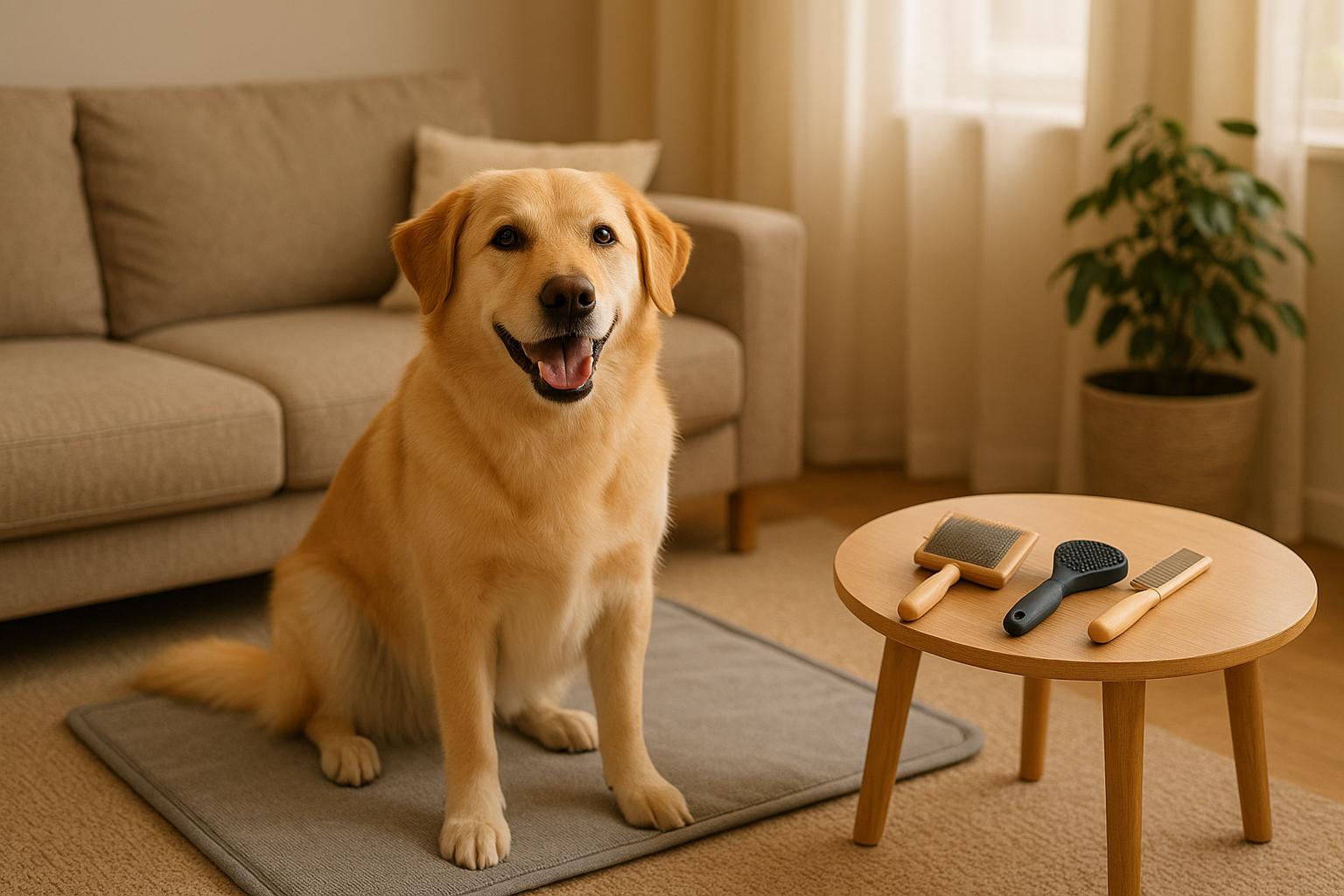
For example, smooth-coated dogs like Kelpies may only need brushing every few weeks, whereas long-coated breeds require more frequent care - sometimes weekly or even daily. A good sitter should brush in the direction of hair growth, starting with a soft brush or wide-tooth comb to loosen tangles and then using a finer comb for stubborn knots.
When it comes to double-coated breeds, they should use tools like undercoat rakes or slicker brushes, working from the undercoat outward. If mats are too severe to handle at home, they should recommend a professional groomer rather than attempting to cut the hair themselves. They should also know that bathing a dog with mats can make them harder to remove, potentially causing discomfort if not addressed properly.
How Do They Handle Bathing and Skin Care?
Ask: "How do you ensure proper skin care during bathing, and what products do you use for my dog's needs?" The sitter should provide a calm bathing experience and use gentle, natural products - preferably Australian-made - to avoid irritation and address common skin conditions like allergies or dandruff.
Over-bathing can strip a dog's natural oils, leading to dry skin, so it’s important the sitter understands how often to bathe your dog. Also, check their drying methods, as improper drying can lead to skin infections. A good sitter should be able to spot emerging skin issues during bathing and know when to notify you or recommend veterinary advice.
Questions About Training and Safety Standards
When it comes to your dog's health, a sitter's training and safety standards are just as important as their grooming techniques. In Melbourne's bustling pet care scene, it's essential to confirm these aspects before hiring a pet sitter. While formal qualifications aren't legally required for dog groomers in Australia, asking about their credentials can go a long way in ensuring your dog's safety and wellbeing.
What Training and Certifications Do They Have?
One of the first questions to ask your potential sitter is: "Do you hold a Certificate III in Animal Care Services, and can you outline your grooming-specific training?" The Certificate III in Animal Care Services (ACM30122) is the nationally recognised qualification for pet groomers in Australia. This government-accredited program equips groomers with key skills, including administering basic animal first aid (ACMGEN309), adhering to infection control protocols (ACMINF301), and safely handling animals - critical for managing anxious pets.
If the sitter hasn’t completed this qualification, inquire if they’ve attended workshops or upskilling sessions that focus on breed-specific grooming and safe handling techniques. These additional training opportunities can demonstrate their commitment to maintaining high standards of care.
How Do They Maintain Hygiene and Equipment?
Hygiene is non-negotiable when it comes to grooming. Ask the sitter about how they clean and maintain their tools and equipment. A professional should ensure all grooming tools - like brushes, combs, and clippers - are cleaned between uses. Grooming tables should be stable, easy to sanitise, and non-slip for added safety.
It’s equally important that they use cleaning agents that are both effective and safe, following the manufacturer’s guidelines. This is particularly crucial for dogs with sensitive skin or allergies, as poorly maintained tools can lead to infections or skin reactions. Regular disinfection of all surfaces and tools helps prevent cross-contamination and keeps your dog safe.
Are They Insured and Police Checked?
Another key factor is verifying whether the sitter has public liability insurance that explicitly covers grooming services. This type of insurance is essential for protecting against accidents or mishaps during grooming. Be sure to confirm that their policy includes grooming tasks, as some pet sitting insurance plans may exclude certain activities.
Additionally, request documentation of police checks to ensure the sitter’s reliability and trustworthiness. Don’t hesitate to ask for proof of their insurance coverage and any relevant safety certifications - it’s your right as a pet owner to feel confident in their qualifications.
Next, let’s explore how sitters handle daily care tasks in Melbourne’s unique environment.
Questions About Daily Care and Melbourne Conditions
Melbourne's famously unpredictable weather means pet sitters need to adjust their grooming routines to keep your dog's coat in top condition. Before hiring a sitter, it's worth discussing the specific daily grooming tasks they'll handle and how they adapt their care to Melbourne's ever-changing climate. These details ensure your pet's grooming needs are met, no matter the weather.
What Daily Grooming Tasks Will They Perform?
It's important to ask your sitter: "What specific daily grooming tasks will you handle, and how often will you check my dog's coat after outdoor activities?" For medium, long-haired, or double-coated breeds, daily brushing is a must. This helps prevent matting, removes loose fur, and spreads natural oils that keep the coat clean and healthy. This is especially crucial during spring and autumn when shedding is at its peak.
After outdoor adventures in Melbourne's parks or gardens, sitters should inspect your dog's coat for debris, tangles, or signs of irritation. These regular checks complement the more thorough grooming tasks, ensuring your dog's coat stays in the best possible shape.
How Do They Manage Melbourne Weather and Outdoor Care?
Melbourne's weather can swing from sweltering heat to chilly rain, so it's essential to ask: "How will you keep my dog's coat clean and healthy during extreme weather?" During heatwaves, a good sitter will plan walks for cooler times of the day - early mornings or late evenings. They'll also provide shaded areas and ensure your dog has plenty of fresh water, possibly with ice for extra cooling. For dogs with light or thin coats, applying pet-safe sunscreen to exposed areas like the nose, ears, and belly can help prevent sunburn.
When the weather turns cold or rainy, short-haired or thin-coated dogs may need a snug winter coat or jumper that stays dry. If the coat gets wet, it should be swapped out immediately. After wet walks, cleaning your dog's paws is a must to remove mud, salt, or chemicals. Indoors, resting areas should be warm, dry, and raised off cold floors, especially when temperatures dip close to freezing. These weather-specific adjustments are vital for maintaining your dog's comfort and coat health.
Where Will They Perform Grooming Tasks?
Location matters, so ask: "Where will you groom my dog, and what tools do you use to ensure safe and effective grooming?" Sitters may carry out grooming tasks at your home using portable equipment, at their own residence if home boarding is provided, or in a specialised facility. For in-home grooming, make sure the sitter uses professional-grade, safe tools to deliver proper care.
If grooming is done at the sitter's location, confirm that they have a dedicated, clean, and well-maintained space for bathing, drying, and grooming. These facilities should meet animal welfare standards and provide enough room for your dog to feel comfortable during the process. By clarifying these details, you can ensure your pet receives the care they deserve.
Questions About Health Monitoring and Emergencies
Even with the most attentive grooming practices, unexpected issues can still pop up. A capable sitter needs to spot problems early and act fast to ensure your dog's well-being. This ties back to the grooming and safety measures we discussed earlier.
How Do They Handle Grooming Injuries or Reactions?
It's important to ask, "What do you do if there's a grooming-related emergency, like a cut or an allergic reaction to products?" A well-prepared sitter should know basic first aid for minor injuries, such as cleaning wounds, applying bandages, and keeping an eye on the injury. For more serious situations, contacting a vet immediately is non-negotiable. Allergic reactions to grooming products require quick action, so your sitter should have your vet's contact information and know the closest emergency clinic in Melbourne. They should also have a clear plan for notifying you and seeking your approval for any necessary treatments.
Will They Monitor Skin and Coat Condition?
Grooming isn't just about keeping your dog looking good - it’s also a chance to check for early signs of skin problems. A good question to ask is, "How do you check for skin and coat issues like dryness, irritation, or parasites?" Your sitter should examine your dog's skin and coat during grooming sessions, looking for redness, rashes, flakes, or dryness. They should also feel for unusual bumps, scabs, or sores and let you know about any changes right away.
"Professional groomers can detect skin problems by noticing redness, rashes, flaking, or excessive dryness while brushing and bathing a dog. They may also feel unusual bumps, scabs, or sores that indicate infections, parasites, or allergies. Any foul odours or signs of irritation can be a clue that veterinary attention is needed." – Scoopy Doo's Delray Beach
Key areas like behind the ears and under the collar are common spots for fleas and ticks, so these should be checked carefully. They should also inspect your dog's ears for signs of infection or mites. If anything seems off, you or your regular Melbourne groomer should be informed immediately.
What Happens If They're Unavailable?
Planning for the unexpected is just as important as the day-to-day care. Ask, "What’s your backup plan if you can’t make it?" Your sitter should have a reliable replacement ready - preferably someone who knows your dog's grooming routine and can step in seamlessly. In Melbourne, this could be a trusted neighbour, family member, or friend who understands your pet's needs and can maintain the same level of care.
Make sure your sitter has detailed instructions about your dog's care, including diet, medications, grooming preferences, and any behavioural quirks like anxiety triggers. It’s also a good idea to fill out an "Emergency Animal Authorisation" form, giving your backup contact access to your home and the authority to make decisions, including arranging vet care if you’re unreachable. Keep your dog's vaccination records up to date and easily accessible in case temporary boarding or additional care becomes necessary.
Choosing the Right Pet Sitter for Your Dog
When it comes to finding the ideal pet sitter in Melbourne, it’s not just about someone to watch your dog - it’s about ensuring they understand your dog's grooming needs and can work seamlessly with professional groomers. A good sitter should have a solid grasp of breed-specific care and daily grooming routines. For example, they should know how to care for your dog's coat type, including brushing techniques, appropriate bathing schedules, and ways to handle Melbourne's hot summers, which can be particularly challenging for thick-coated breeds prone to heat stress.
It’s also important to confirm that they know their limits. Tasks like clipping, de-matting, or nail trimming should be left to professional groomers. Ask about their approach to grooming and whether they’re comfortable collaborating with your regular groomer. Providing them with a detailed pet profile - including contact details for your groomer and vet - can ensure they follow proper protocols when professional help is required.
Make sure to check their qualifications too. Look for pet first aid training, insurance coverage, police clearance, and good hygiene practices. A sitter should also be able to monitor your dog’s skin and coat for any signs of issues, such as irritation or dryness, and know when to escalate concerns to a professional.
Remember, a sitter’s role is to handle the basics of daily coat maintenance, not complex grooming tasks. If they have a backup contact, ensure this person is equally familiar with your dog's grooming routine and can step in seamlessly, including transporting your pet to appointments if needed. This continuity is crucial for your dog’s well-being.
Ultimately, the best pet sitters in Melbourne understand that grooming is about more than just keeping your dog looking good - it’s essential for their health and comfort. Choose someone who values the expertise of professional groomers and works in partnership with them to keep your dog happy and healthy while you’re away.
FAQs
What qualifications should a pet sitter in Melbourne have for dog grooming?
If you're searching for a trustworthy pet sitter in Melbourne who also provides dog grooming services, it's important to check for formal training in animal care or grooming. Qualifications like a Certificate III in Animal Care Services or completion of specialised dog grooming courses from recognised Australian institutions are solid indicators of their expertise. These credentials show they know how to maintain your dog's coat, hygiene, and meet specific grooming needs based on breed.
Another key qualification to look for is pet first aid certification, such as those offered by the Australian Red Cross. This ensures they are equipped to handle emergencies, prioritising your dog's safety and well-being while under their care.
What should I ask a pet sitter to ensure they understand my dog's grooming needs?
To make sure your Melbourne pet sitter is ready to handle your dog's grooming needs, start by discussing their experience with your dog's breed and coat type. Ask if they understand breed-specific grooming standards and how they handle dogs that might have sensitive skin or feel anxious during grooming.
Talk about any special needs, like keeping your dog's coat in good condition through Melbourne’s unpredictable weather or managing seasonal shedding. Be specific about what you expect - whether it’s regular brushing, bathing, or trimming - and confirm they stick to professional grooming practices that meet local standards. Clear communication will help ensure your dog’s comfort and well-being are always the top priority.
What should I do if my pet sitter cancels at the last minute?
If your pet sitter cancels at the last minute, don’t panic. Reach out to a trusted friend, family member, or another professional pet sitter in Melbourne who might be able to help. Having a backup plan, like a secondary sitter or an on-call pet care service, can save the day in these situations.
Ensure the new carer is well-prepared by providing them with all the essential details about your dog’s routine, dietary preferences, and any grooming or hygiene needs. Be sure to share your vet’s contact information and outline an emergency plan to keep your pet safe and comfortable.
Related Blog Posts
Clean, Calm & Professional Grooming.
Whether they need a full style cut or just a tidy-up, our Melbourne team provides a low-stress grooming experience that leaves your pet looking (and feeling) their best.